
How to Choose the Right Closet Storage Franchise for You
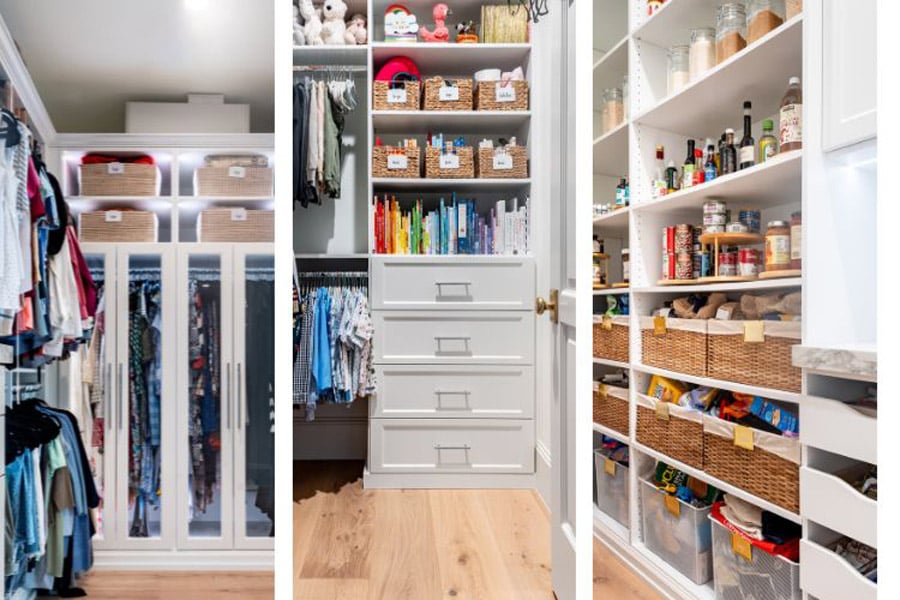
Americans are expected to spend approximately $518 billion on home improvements and maintenance by the end of 2026. Remote work, smaller living spaces, and a renewed focus on functional design have turned storage spaces like closets, pantries, garages, and home offices into a serious business category.
That growth has also produced a crowded field of closet storage franchise brands, most of which boast some version of "custom storage solutions." So how do you tell them apart, and how do you know which type of business model actually fits your goals, budget, and skill set?
Below, we break down what to compare across the category investment, business model, and support, and why so many first-time franchise owners choose The Tailored Closet.
What to Compare When Evaluating a Closet Storage Franchise
Never judge a book just by its cover. Brand experience and showroom photos matter, but the decision regarding which franchise usually comes down to six things:
- Total investment and franchise fee: a streamlined investment model highlights what you need in liquid capital and net worth to get approved and open.
- Manufacturing model: do you build the product yourself (e.g., higher overhead, more equipment) or outsource to vetted vendor partners (e.g., lower overhead, faster ramp-up)?
- Territory size and protection: how big is your market and how much of it do you control (if not all of it)?
- Brand infrastructure: operational support such as design technology, CRM, and marketing engine, as well as the strength of the parent company behind the brand.
- Franchisor support: training breadth and depth, ongoing coaching
- Local market fit: Look at household growth, remodeling activity, existing competition, and whether the available territory gives you enough room to build demand.
Closet Storage Franchise Category Comparison
Closet and storage franchises generally fall into a few distinct business models. Here's how The Tailored Closet compares to the broader category:
|
What to Look For |
The Tailored Closet |
Common Closet Franchise Models |
|
Production Model |
Non-manufacturing outsourced to vetted vendor partners, so you focus on sales & design |
Often, in-house manufacturing that requires equipment, factory space, and hands-on production management |
|
Overhead & Inventory |
Lower overhead with minimal inventory and collective buying power on materials |
May involve additional overhead tied to manufacturing equipment, production space, and staffing |
|
Startup Footprint |
Work-from-home business plus a small warehouse for staging materials |
May require a dedicated showroom and/or factory space |
|
Territory Protection |
Protected territory with a guaranteed minimum of 100,000 households |
Territory size and protection vary widely by brand |
|
Design Technology |
Innovative 3D design software integrated with CRM |
Design software capabilities vary; not always integrated with a full CRM |
|
Revenue Streams |
Residential and light commercial (retail, healthcare, property management, new construction) Opportunity extends beyond closets to custom organization solutions for pantries, home offices, laundry rooms, mudrooms, wall beds, and other functional spaces. |
Some models are primarily residential-focused. Product offerings vary. |
|
Franchisor Backing |
Backed by Home Franchise Concepts (eight home-service brands, 2,500+ territories, shared resources) |
Often an independent, single-brand franchisor |
|
Marketing Support |
National lead generation plus a local marketing toolkit built for the category |
Marketing support and lead gen infrastructure vary by brand |
|
Franchisee Community |
Protected territories eliminate internal brand competition, fostering an open, collaborative network |
Peer collaboration depends on individual brand culture |
Best Franchise Model for Your Owner Profile
There's no universal "best" brand; it's more about the franchise model that fits the kind of owner you are and the business you want to run.
- Model #1: First-time franchise owners who want a lower entry cost and a non-manufacturing model: A model built around outsourced production, like The Tailored Closet's, keeps overhead down and lets you focus on sales, design, and managing your team rather than running a factory floor.
- Model #2: Owners who want the backing of a larger home-services portfolio: Being part of a multi-brand franchisor gives you access to shared resources, marketing muscle, and experience supporting owners across categories.
- Model #3: Owners with $250,000+ in liquid capital and a manufacturing or cabinetry background: A vertically integrated, factory-based model rewards owners who are comfortable managing production in-house and have the capital to support it.
- Model #4: Owners chasing the most recognized legacy name in the category, with a larger capital base: Some of the original players in this space carry the strongest brand recognition, but that typically comes with a wider — and often higher — investment range and a showroom-plus-manufacturing footprint.
- Model #5: Owners looking for a smaller regional operation: Some manufacturing-based brands offer a comparatively lower entry point, though often with a smaller national footprint and support network.
- Model #6: Owners who want to add commercial revenue streams: A model that explicitly supports light commercial work (i.e., retail shops, healthcare facilities, property managers, and new construction) alongside residential jobs broadens revenue beyond the traditional single-family home.
Why Franchisees Keep Choosing The Tailored Closet
Beyond the numbers, a few differentiators consistently come up with Tailored Closet owners and prospective franchisees:
- Lower overhead through an outsourced production model: Rather than owning and running manufacturing equipment, The Tailored Closet sources from vetted, high-quality vendor partners. That means minimal inventory, no large factory investment, and collective buying power that keeps material costs competitive.
- Protected, sizable territories: Every territory comes with a guaranteed minimum of 100,000 households, and no other Tailored Closet franchisee will market or sell in your area.
- 3D design software: Franchisees can build a proposal in front of the customer during the consultation, complete with visuals and an accurate parts list — a meaningful edge in a consultative, high-closing-rate sales process.
- Training and support: The Tailored Closet provides comprehensive training, ongoing support, and access to a network of industry experts, giving franchisees guidance as they launch and grow their businesses.
- A work-from-home business with a small warehouse: The model requires just a small warehouse for staging materials, which keeps startup costs and ongoing overhead lower than a showroom-based competitor.
- Residential and commercial revenue streams: Franchisees can serve homeowners and local businesses, helping diversify and expand the potential customer base.
- The strength of Home Franchise Concepts: As part of a portfolio of home service brands, The Tailored Closet franchisees benefit from an established franchisor with deep experience supporting owners across brands like Budget Blinds, Kitchen Tune-Up, and Two Maids, plus national lead-generation programs and a local marketing toolkit built specifically for this business.
CALLOUT SECTION: Learn about franchise ownership with The Tailored Closet from some of our franchisees.
Making the Right Choice for You
There's no universally "best" closet storage franchise, only the best fit for your capital, risk tolerance, and the kind of business you want to build day to day. If you're looking for a lower-overhead, non-manufacturing model with the backing of a large, multi-brand franchisor, national lead generation, and both residential and commercial revenue potential, The Tailored Closet is worth a serious look.
Inquire now to talk through your specific goals and see whether The Tailored Closet is the right next step for you.